For years, B2B marketers focused on winning search rankings to drive traffic and generate leads. That playbook is changing fast.
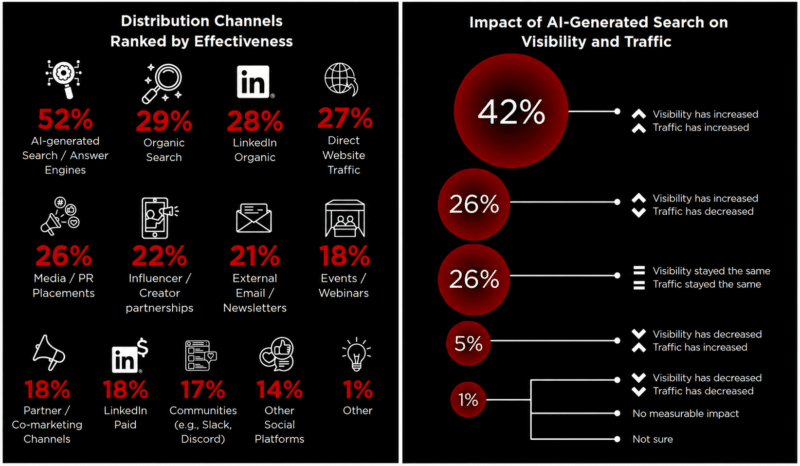
Fifty-two percent of B2B tech marketing leaders now see AI-generated search as their top channel for reaching buyers, according to 10Fold’s new report, “The Visibility Reset: How AI Search Is Changing B2B Content Strategy.” Instead of clicking through pages of search results, buyers are getting data by asking questions in AI-powered tools.
That shift changes how content gets discovered.
Visibility no longer depends only on ranking first in Google. Increasingly, it depends on whether AI systems recognize your content as credible enough to cite, summarize, or reference in responses.
Credibility matters more than volume
AI has made content production easier, but marketers are learning that more content does not guarantee more visibility.
As generative AI floods the internet with similar blog posts and explainers, differentiation is becoming harder. The report found that marketers are increasingly concerned about content quality, authority, and visibility in crowded AI-driven environments.
That is pushing brands to focus more on signals AI systems may interpret as trustworthy. Media coverage, analyst mentions, expert bylines, proprietary research, peer-review sites, and influencer validation are becoming increasingly important because they reinforce credibility.
The challenge is not producing more content faster. The challenge is creating content that answers buyer questions better than competing sources.
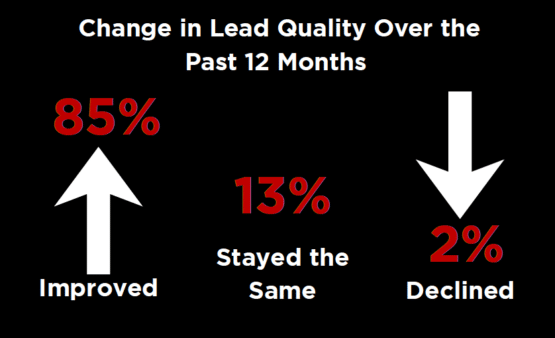
That shift may also explain why some marketers are seeing website traffic decline while lead quality improves.
Traffic matters less than influence
One of the biggest concerns around AI-generated search is the potential loss of website visits. If buyers get answers directly from ChatGPT, Gemini, or Google AI Overviews, they may never click through to a company website.
But the report suggests that lower traffic does not always mean weaker performance.

About 42% of respondents said both visibility and traffic increased over the past year, likely because their content aligned closely with buyer questions and AI discovery patterns. Others reported stronger lead quality even with fewer visits.
The reason is simple. Buyers are self-educating before they ever land on a vendor site.
That creates a new challenge for marketers measuring content performance. The question is no longer just how much traffic a piece generated. Marketers also need to understand whether buyers encountered their expertise during the research process and whether that visibility influenced pipeline, sales conversations, or brand preference.
Marketers are adapting content for AI discovery

B2B teams are already experimenting with ways to improve visibility in AI-powered search environments. The most common tactics include improving product explainers, answering role-specific buyer questions, and creating concise, quote-ready summaries AI systems can easily surface.
The report suggests there is no single fix for AI visibility. Success depends on a combination of technical structure, buyer relevance, authority, and clarity. In other words, the future of B2B content may depend less on gaming algorithms and more on becoming the most credible answer in the room.
The full report can be found here. (Registration required)
The SEO toolkit you know, plus the AI visibility data you need.

The post The AI search shift changing B2B marketing metrics appeared first on MarTech.